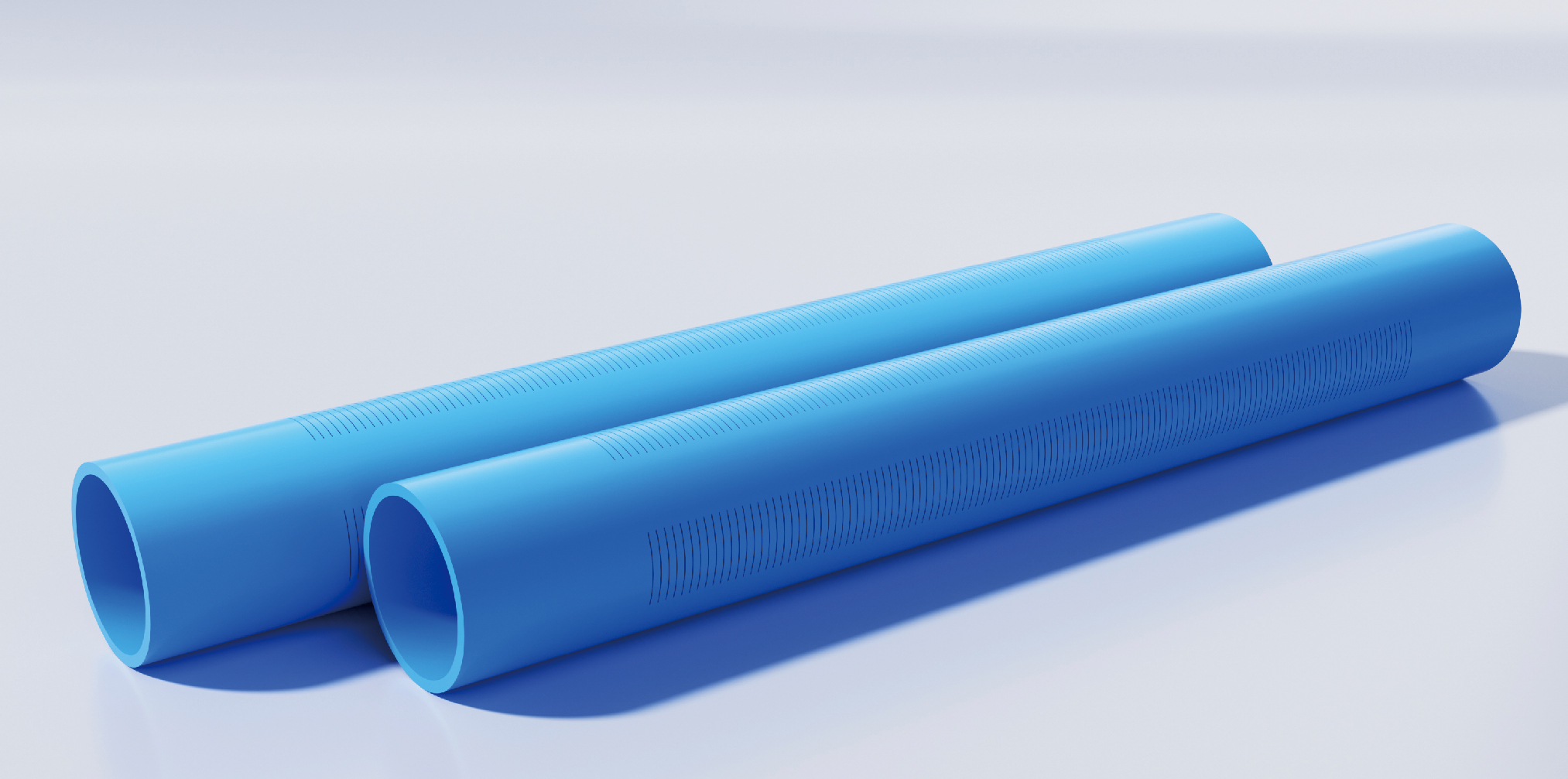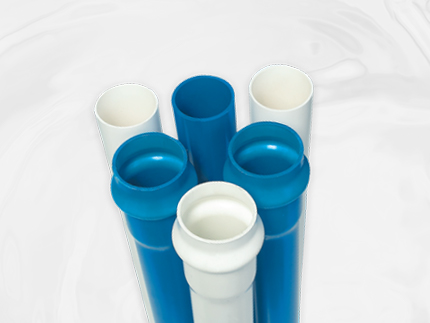
This is one of the most established applications of PVC perforated pipe, leveraging its permeability and filtration properties for soil improvement and precision irrigation.
Farmland Subsurface Drainage & Saline-Alkali Soil Reclamation: Perforated PVC pipes are laid underground at a depth of 1.2–1.5 m with a spacing of 20–40 m, using coconut coir and gravel as envelope materials. The system lowers the groundwater table and controls irrigation-induced salinity. Research shows that crop yields improve by 50–80% in drained areas compared to non-drained, waterlogged areas.
Subsurface Irrigation: Water permeates directly to crop roots through the perforations. Studies indicate this method can save approximately 50% of water compared to conventional irrigation.
Greenhouse Soil Desalination: Perforated PVC pipes (Φ10 cm) installed at 50 cm depth effectively remove accumulated salts in plastic film house soils.
Landscape & Green Space Drainage: Used beneath parks, nurseries, and roof gardens to drain excess water around root zones and prevent root rot. In sponge city construction, it is used in infiltration trenches and blind drains to collect rainwater.
Highway, Railway & Airport Drainage: Smooth-wall perforated PVC pipe is specified for subsurface drainage systems of highways, airports, and similar applications, in nominal sizes of 4, 6, and 8 inches, with pipe stiffness designated as PS 28 and PS 46. The system rapidly removes infiltrated groundwater to prevent pavement pumping or frost damage.
Tunnel & Underground Engineering: Installed behind tunnel linings to channel surrounding groundwater and prevent water pressure buildup that could damage structural integrity.
Slope & Embankment Protection: Used for slope drainage and shallow conveyance along riverbanks and embankments to prevent soil erosion and seepage-induced collapse.
Stormwater Infiltration: Vertical 4- to 6-inch Schedule 40 PVC perforated pipes are used in infiltration practices, installed with lockable caps and anchor plates within gravel beds at intervals of approximately 50 ft.
Foundation & Basement Drainage: Laid around building foundations to intercept groundwater, keeping foundations dry and preventing basement dampness and seepage. Installation typically requires a minimum cover of 48 inches, with perforations facing down.
Perimeter Drainage: Used for perimeter drainage of buildings and structures to manage rainwater and groundwater.
Foundation Subdrainage: Piping is laid level with full bearing in filtering material, with geotextile filter fabric encasing the pipe to prevent soil intrusion.
Septic Tank & Leach Field Systems: Used as leach field drainage pipe to uniformly distribute effluent into the soil for natural purification. Installation follows ASTM F 481 for thermoplastic pipe in septic tank leach fields.
Constructed Wetlands & Ecological Restoration: In subsurface flow constructed wetlands, perforated PVC pipe serves as aeration or collection pipe, increasing dissolved oxygen and preventing clogging.
Aeration & Oxygenation: Perforated PVC pipe forms micro-bubble aeration systems in aquaculture ponds, producing fine bubbles to efficiently increase dissolved oxygen levels for high-density farming.
Water Circulation & Filtration: Used as inlet or distribution piping in recirculating aquaculture systems, where the perforations provide buffering and even water distribution.
Sports Field Drainage: Used in subsurface drainage systems for football fields and golf courses to rapidly remove surface water and ensure quick recovery after rain.
1. It isn't affected by acids, alkalis, salts, and other chemicals, so it can effectively re.sist corrosion from industrial and domestic wastewater, and it lasts a long time, which is especially important in the chemical drainage field.
2. Another advantage is its strong resistance to external pressure.
3. Its unique spiral outer wall structure is like adding multiple 'reinforcements,' greatly improving the pipe's ring stiffness and impact resistance, allowing it to withstand high external pressure without easily deforming, making it perfect for underground installation.
4. On top of that, it's also easy to install and cost-effective.

testtesttesttesttest
| SAP Number( white / 5 . 8M ) | SAP Number( blue / . 8M ) | S | SDR | dn(mm) | en(mm) |
| 8010011715 | 8010010059 | 16 | 33 | 63 | 2.0 |
| 8010011715 | 8010010059 | 16 | 33 | 63 | 2.0 |
| 8010011715 | 8010010059 | 16 | 33 | 63 | 2.0 |
TOP